Spend any time in the Aiken equestrian Facebook groups and you’ll see versions of the same questions come up again and again.Where should I look if I want trails? How much acreage do I really

Dated: September 10 2026
Views: 18
Spend any time in the Aiken equestrian Facebook groups and you’ll see versions of the same questions come up again and again.
Where should I look if I want trails? How much acreage do I really need? Should I buy in an equestrian community or look for a standalone farm? Can I keep horses close to downtown? What about vets and farriers?
They’re good questions — and the answers aren’t always as straightforward as they appear on a real estate listing.
I work with equestrian buyers in Aiken every day, but I also live this lifestyle. My husband is a professional horseman, our daughter rides competitively, and horses are part of our family’s daily life. That means when I walk a potential horse property, I’m looking at it through a slightly different lens.
A beautiful house on ten acres isn’t necessarily a good horse property. And sometimes a smaller, well-designed property can work far better.
If you’re considering buying a horse property in Aiken, here are some of the things I think are worth understanding before you begin.
Before deciding where in Aiken you want to live, think about what you actually want your day-to-day horse life to look like.
Are you keeping two retired horses at home? Do you want your children’s ponies in the backyard? Are you an amateur who wants to ride every morning before work? Do you need a full-size arena? Are you operating a professional training business? Do you want direct access to trails, or are you perfectly happy hauling somewhere to ride?
Those buyers may all be searching for “horse property in Aiken,” but they need completely different properties.
This is usually where I start with my clients. Once we understand how the horses — and the people — are actually going to use the property, it becomes much easier to narrow the search.
One of the most common questions I see is: How many acres do I need for horses in Aiken?
There isn’t one answer.
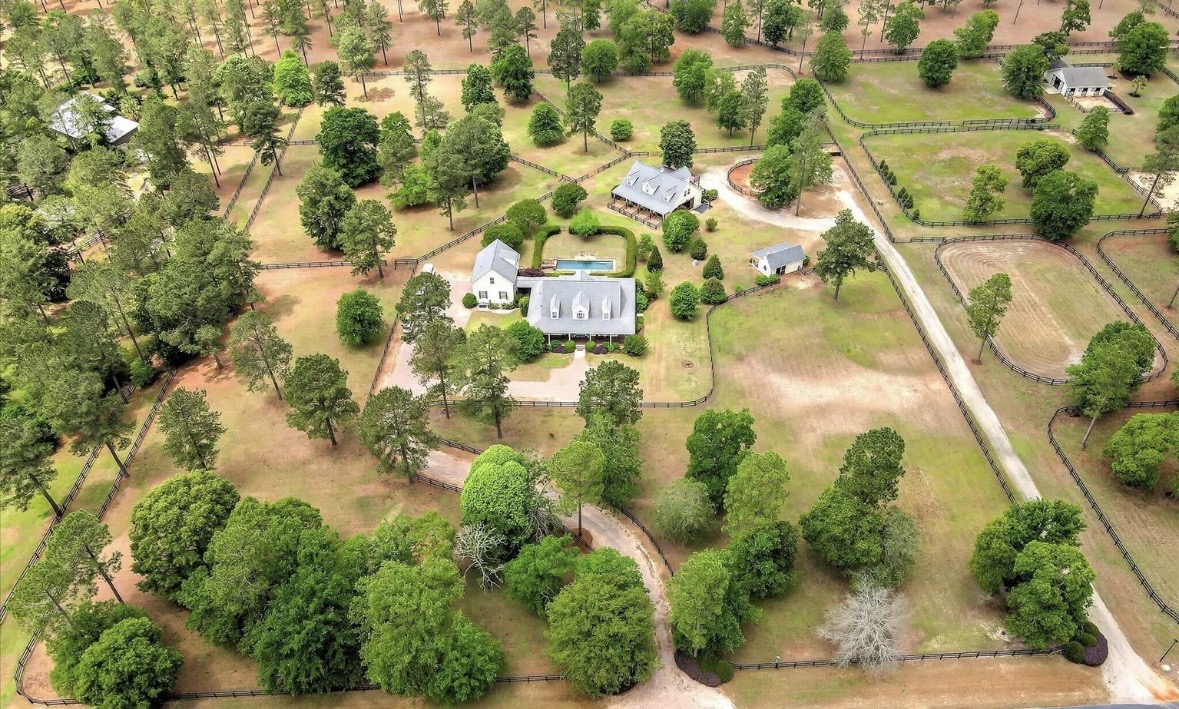
A property’s usable acreage matters much more than the number on the listing. Topography, drainage, soil, shade, existing pasture, the shape of the parcel and where the house and barn sit can dramatically change how a property functions.
Five thoughtfully laid-out acres may work beautifully for a couple of horses. But if an arena is on your wish list, you’ll want to think about where it can actually go — not simply whether the total acreage sounds sufficient.
Ten acres with awkward terrain, wet areas or a poorly placed house may give you far fewer options.
And remember that acreage has to accommodate more than turnout. You may also need room for a barn, arena, trailer parking, equipment, manure management, hay storage and access for trucks.
Before falling in love with the number of acres, look at what those acres can actually do.
Aiken gives buyers both options, and neither is automatically better.
Communities such as Three Runs Plantation and Bridle Creek were designed with equestrians in mind. Depending on the community and property, buyers may have access to established trail systems, riding arenas and other shared equestrian amenities.
That can be incredibly appealing if you want to walk out of your barn, get on your horse and ride without maintaining every piece of infrastructure yourself.
A standalone farm offers a different kind of freedom and privacy. You may have more flexibility in how you configure the property and less concern about community restrictions — but you’ll also be responsible for creating and maintaining your own riding and horsekeeping infrastructure.
The important thing is to understand the tradeoff.
And if you’re buying within any community, read the current covenants and restrictions rather than assuming that because you see horses there, everything you want to do will be permitted.
This is particularly important if you plan to run a business from the property.
Aiken County has zoning classifications specifically related to equestrian uses, but permitted uses and requirements vary by property and zoning district. HOA rules, deed restrictions and municipal regulations can add another layer.
So if you intend to board horses, train professionally, build an arena, add stalls or operate another equestrian business, don’t assume you’ll be able to do it simply because the property already has a barn.
Verify first.
That’s much easier than discovering after closing that your plans and your property’s permitted uses don’t match.
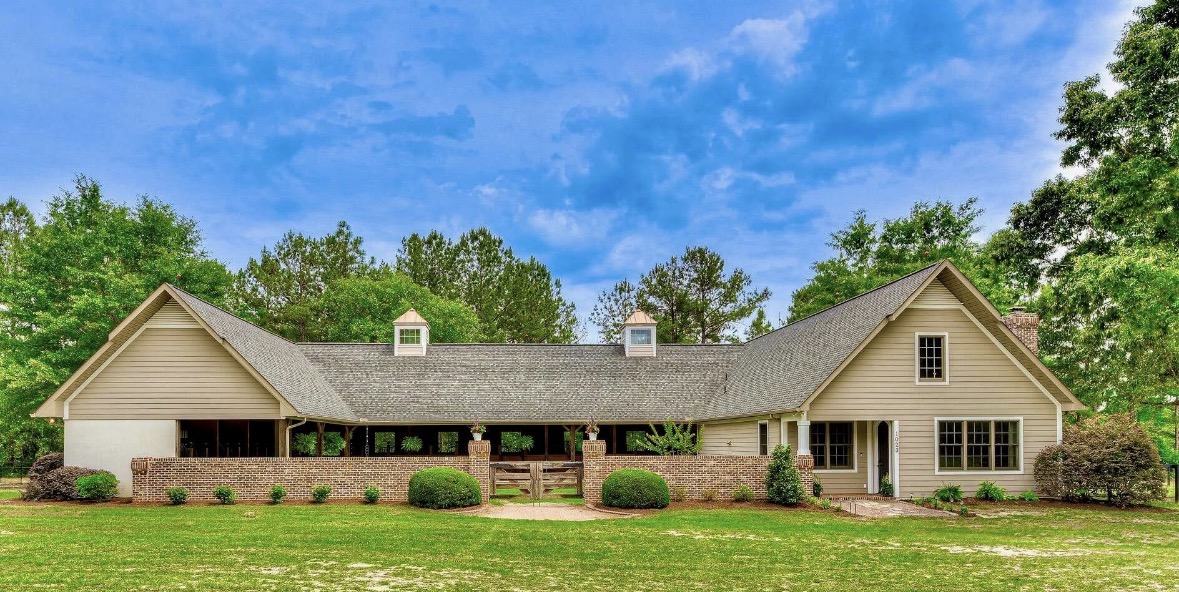
A barn photographs beautifully in a real estate listing.
That doesn’t necessarily mean it’s a good barn.
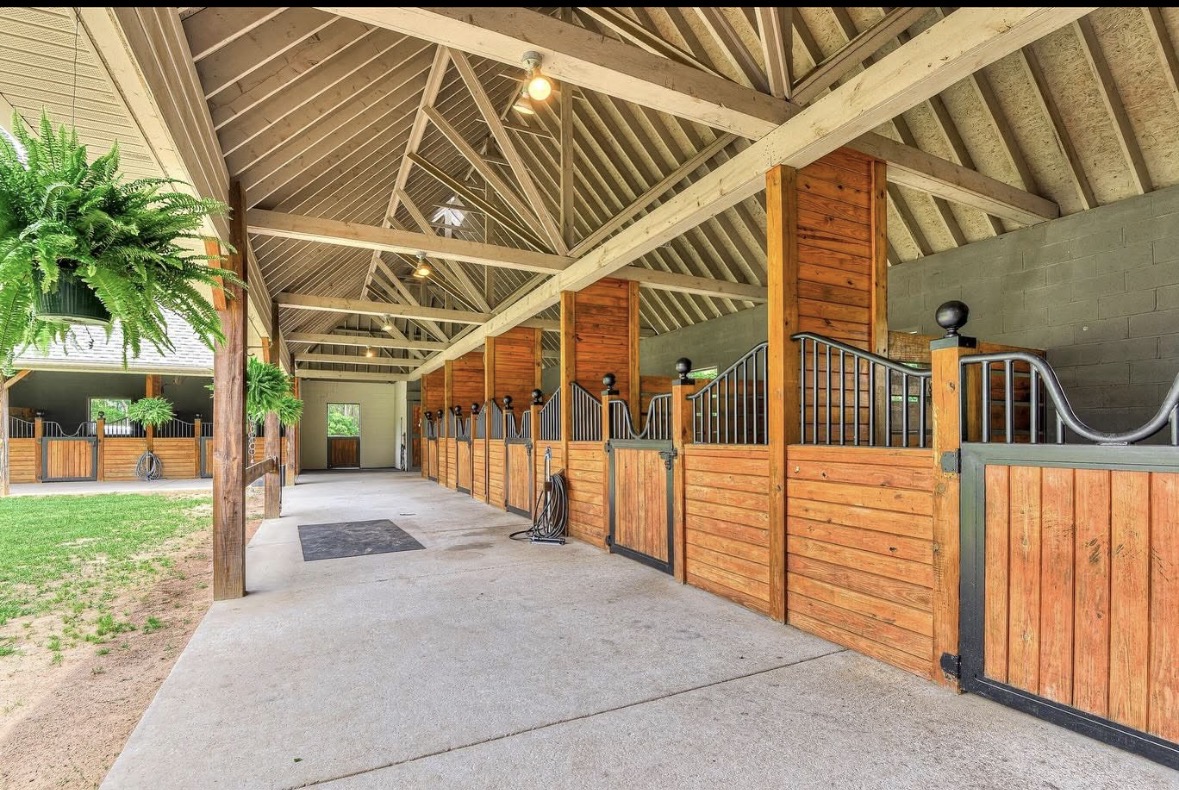
When I’m looking at an existing equestrian property, I’m thinking about practical things: stall dimensions, ventilation, aisle width, water, electrical systems, hay and feed storage, drainage around the barn, wash areas, tack storage, manure management and how easily a truck and trailer can get in and out.
Then there’s the location of the barn itself.
How far is it from the house? Where are the paddocks? Can you see the horses? Is the barn convenient to the arena? Can hay deliveries reach it easily? What happens after several days of heavy rain?
Those details don’t make glamorous listing photographs, but you’ll notice them every single day once you live there.
For many equestrian buyers, the riding arena is high on the wish list.
If the property already has one, its size is only part of the equation. Footing, base, drainage and general condition matter. If there isn’t an arena, don’t assume that a large open area means you can simply build one there. Location, grading, drainage, access and applicable restrictions all need to be considered.
Fencing deserves the same scrutiny. A property may be advertised as fenced, but that doesn’t necessarily mean the fencing is appropriate for your horses. Its type and condition, paddock configuration, gates, access to water and the ability to separate horses all affect how the property will function.
The same applies to run-in sheds, dry lots and other horsekeeping infrastructure.
The important question isn’t whether a property checks every equestrian box. It’s whether it gives you a realistic path to creating the setup that works for you.
Trail access is another question I see constantly.
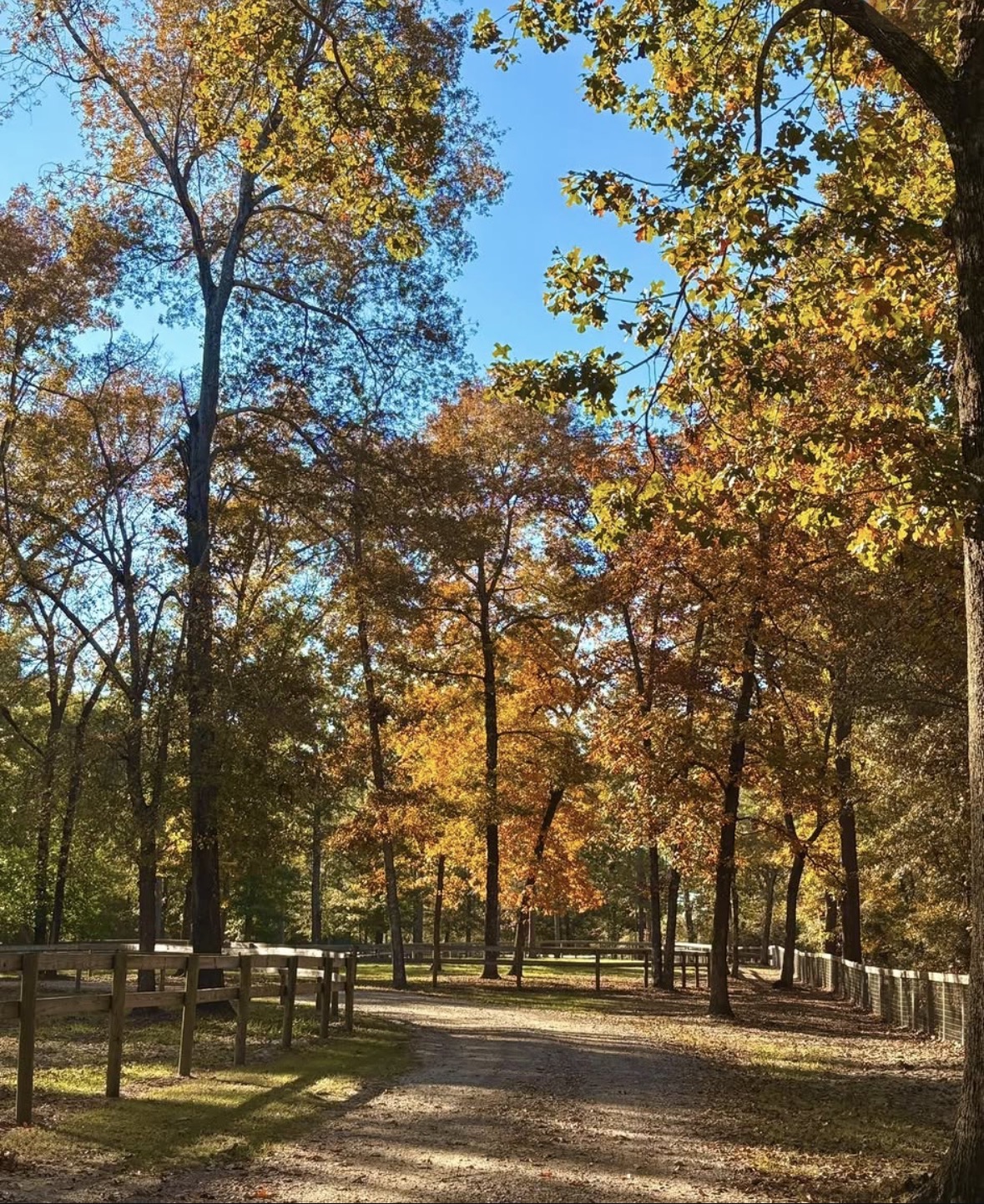
Some equestrian communities have their own private trail systems. Other properties may be near places where people haul in to ride. And then, of course, there’s Hitchcock Woods.
Hitchcock Woods is one of the things that makes Aiken genuinely unusual as an equestrian town. More than 2,000 acres of privately owned forest sit in the heart of Aiken, with roughly 70 miles of sandy trails traditionally used by equestrians and pedestrians.
But “close to Hitchcock Woods” isn’t the same thing as “ride directly into Hitchcock Woods.”
The same is true of community trail systems. If riding from your own property is important to you, determine the actual access associated with that particular parcel rather than relying on a listing description that says “near trails.”
For some buyers, direct trail access is non-negotiable. For others, being ten or fifteen minutes from their trainer matters far more.
That’s why I go back to that first question: How do you actually want to live with your horses?
Aiken isn’t a one-discipline horse town, and that matters when choosing where to live.
A hunter/jumper family may prioritize proximity to its trainer and the venues where it regularly shows. An eventer may have completely different priorities. Someone who primarily trail rides may care much more about access to miles of riding than proximity to a showground.
And then there’s the human side.
Do you want to be able to get downtown easily for dinner? How far do you want to drive for school, groceries or the airport? Is your dream complete privacy, or would you rather have equestrian neighbors?
One of Aiken’s great strengths is that you don’t necessarily have to choose between having horses and having a life outside the farm. But the right balance is very personal.
Another question that comes up frequently from people considering a move to Aiken is: “What about vets and farriers?”
It’s an important consideration when relocating with horses, particularly if you have competition horses, older horses or horses requiring specialized care.
One advantage of living in an established horse community like Aiken is the depth of the equestrian support network. Veterinarians, farriers, feed and hay suppliers, bodyworkers, dentists, trainers, haulers and other horse professionals are part of the infrastructure supporting the local horse population.
That doesn’t mean I’d wait until the moving van arrives to put your team together.
If you’re relocating horses to Aiken, ask your trainer, veterinarian and other local horse people for recommendations well in advance, particularly if you have specific veterinary or shoeing needs.
Finding the right property matters, but so does having the right people around you once your horses arrive.
This is one of the biggest mistakes I see buyers make.
Suppose you find a property with a house you love and enough acreage, but it needs fencing, additional turnout, barn renovations, an arena and improved drainage.
That’s not necessarily a bad purchase.
But those costs need to be part of your decision from the beginning.
Conversely, a more expensive property with good fencing, established pastures, a functional barn and the riding infrastructure you need may ultimately be the better value.
The question isn’t simply, “What does this farm cost?”
It’s “What will this farm cost by the time it works the way I need it to?”
Horse people — myself included — have a tendency to walk onto a property, see a beautiful barn and good turnout and immediately start imagining horses in the paddocks.
Then someone remembers there’s also a house.
The best property is one that works for the whole family.
Think about commute, schools, internet, shopping, maintenance, guests and the amount of property you realistically want to manage.
A horse property should make your life better, not simply give you more chores.
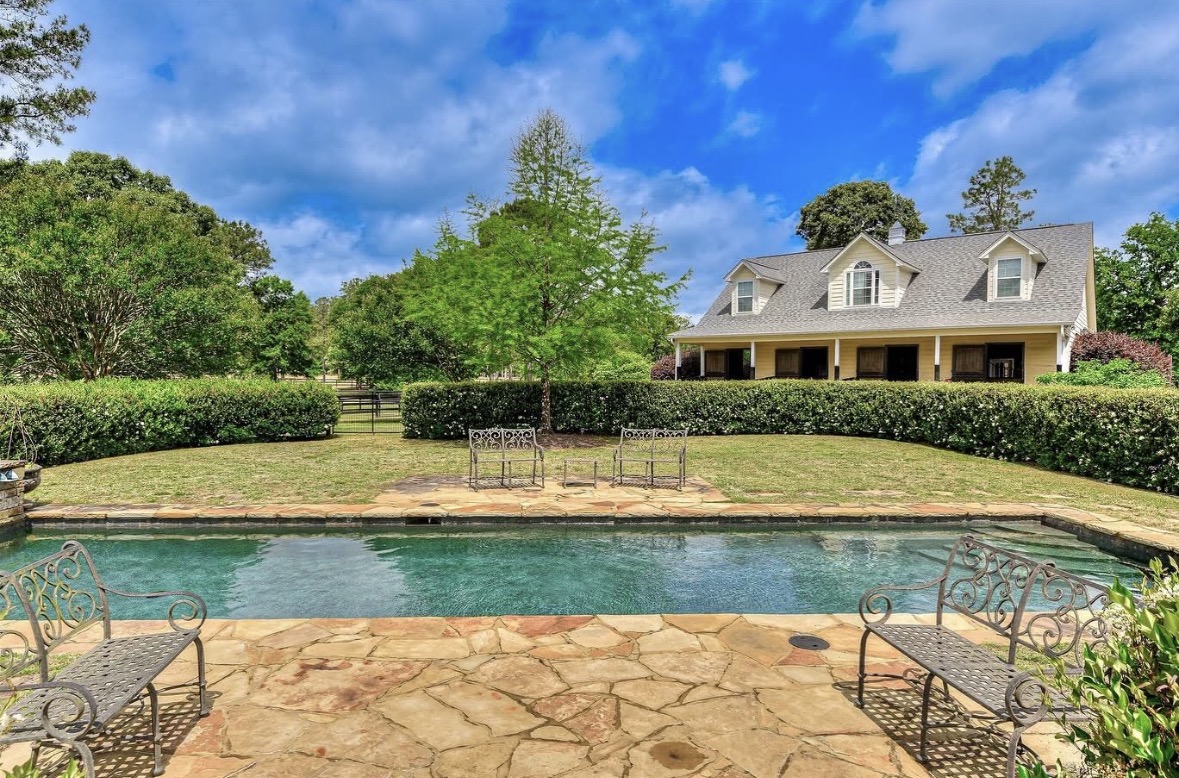
There is a reason so many of those Facebook conversations begin with some version of, “We’re thinking about moving to Aiken…”
Aiken has an extraordinary depth of equestrian culture. Horses aren’t tucked away on the outskirts of town; they’re woven into the community.
You can have a substantial farm, live in a planned equestrian community, or find situations that put you remarkably close to downtown while remaining connected to the horse world.
More importantly, there isn’t just one way to be an equestrian here.
Professionals, amateurs, competitors, foxhunters, trail riders and families with a couple of beloved horses can all create very different versions of an Aiken life.
That’s why the question I usually encourage buyers to answer first isn’t:
“Which farm do I like?”
It’s:
“How do I actually want to live with my horses?”
Once we know the answer to that, finding the right Aiken horse property becomes a lot easier.
About Rachel
Rachel Clough de Videla is an Aiken, South Carolina Realtor specializing in equestrian, luxury and sporting properties and the founder of Sporting Life Aiken at eXp Realty. Rachel and her family are active participants in Aiken’s equestrian community through Rancho Pampa, the hunter/jumper training operation of her husband, professional horseman Martin Videla.

Refined service, exceptional properties and a lifestyle worth living.I specialize in luxury homes, equestrian properties and farms, land and residences in Aiken, helping clients d....
Spend any time in the Aiken equestrian Facebook groups and you’ll see versions of the same questions come up again and again.Where should I look if I want trails? How much acreage do I really
Pony Finals Are Won Long Before Kentucky: What the Journey Teaches Us About Horses, Home, and AikenEvery August, the best pony riders in the country head to the Kentucky Horse Park for the USEF Pony
Events in Aiken This Summer: What's Happening in June and July 2026If you think Aiken's equestrian calendar goes quiet in the summer, think again. While the big spring season has wrapped up, June
June 2026 Equestrian Events in Aiken, SCSummer may be heating up, but the equestrian calendar in Aiken remains active with hunter/jumper competition, dressage shows, eventing, and educational
 Aiken Board of Realtors® All information deemed reliable but not guaranteed. All properties are subject to prior sale, change or withdrawal. Neither listing broker(s) or information provider(s) shall be responsible for any typographical errors, misinformation, misprints and shall be held totally harmless. Listing(s) information is provided for consumer's personal, non-commercial use and may not be used for any purpose other than to identify prospective properties consumers may be interested in
purchasing. The data relating to real estate for sale on this website comes in part from the Internet Data Exchange program of the Multiple Listing Service. Real estate listings held by brokerage firms other than eXp Realty, LLC - Aiken(SC) may be marked with the Internet Data Exchange logo and detailed information about those properties will include the name of the listing broker(s) when required by the MLS. Copyright ©2026 All rights reserved.
Last Updated: September 21, 2026 4:28 AM UTC
Show More...
Aiken Board of Realtors® All information deemed reliable but not guaranteed. All properties are subject to prior sale, change or withdrawal. Neither listing broker(s) or information provider(s) shall be responsible for any typographical errors, misinformation, misprints and shall be held totally harmless. Listing(s) information is provided for consumer's personal, non-commercial use and may not be used for any purpose other than to identify prospective properties consumers may be interested in
purchasing. The data relating to real estate for sale on this website comes in part from the Internet Data Exchange program of the Multiple Listing Service. Real estate listings held by brokerage firms other than eXp Realty, LLC - Aiken(SC) may be marked with the Internet Data Exchange logo and detailed information about those properties will include the name of the listing broker(s) when required by the MLS. Copyright ©2026 All rights reserved.
Last Updated: September 21, 2026 4:28 AM UTC
Show More...
